Showing posts with label autism spectrum disorder. Show all posts

Tuesday, February 3, 2015

Spectrum Siblings Support Group

Spectrum Strategies is offering a Spectrum Siblings Support Group (flyer available click here):

2950 Buskirk Avenue, Suite 300, Walnut Creek, CA 94597

www.spectrumstrategies.org
2950 Buskirk Avenue, Suite 300, Walnut Creek, CA 94597

www.spectrumstrategies.org
 
Spectrum Strategies is a grass roots 501(c)(3) non-profit organization

striving to provide community support to families of children with

Autism.
Project 1 – Spectrum Siblings Support Group
 
Our preliminary survey of young adults who grew up in a household with a sibling with Autism

revealed that the emotional needs of the neuro-typical sibling has often gone unrecognized.

Siblings reported feeling that their Autistic brother or sister received “all the attention;” they

perceived a constant demand to marginalize their own wishes and to behave in a way so as not to

be the source of additional burden; they felt socially isolated. Over time, these pressures led to

depression, anxiety, loneliness and desperation sometimes resulting in destructive behaviors (e.g.

drug use, truancy) in adolescence. When asked if a support group of other autism siblings may

have been helpful, the overwhelming response was “Yes.”

Goal:

In cooperation with a trained and experienced psychologist, we offer a 6-week program for

siblings, aged 9-12 years old, of children with Autism to meet in a small support group of 4-8

participants for 1.5 hours each session. The session will consist of structured play activities and

discussion specifically designed for the participants. (In the future, we strive to host a second

support group consisting of siblings aged 13-16.)

When: 2nd and 4th Thursday evenings of the month from 6:45-8:15

Where: Good Shepherd Lutheran Church, 4000 Clayton Road, Concord

Cost: $120 for the full 6 sessions ($20 per session) to be paid as a tax-deductible donation at

the time of the first session (or in advance) to Spectrum Strategies.

Start/End Date: TBD either 2/26-5/14/2015 or 3/12-5/28/2015
*After the conclusion of the 6-week program, Spectrum Strategies will host a swim party around

the first weekend of June 2015 for the participating siblings.


Please contact Lucia Kanter St. Amour, Founder and Executive Director of Spectrum Strategies
at lucia@spectrumstrategies.org with the following information:


*Participant’s name, age, and name and age of sibling with Autism; number of other children in

the household.

*Name and contact information (telephone, email, home address) of parents or guardian of the

participant.

*Any additional information you would like to share.
Saturday, January 3, 2015

A Concerned Dad Asked Me, ‘What Will Happen to My Son With Autism When I’m Gone.’ This Is My Answer.

By Kerry Magro from The Mighty

At an Autism Society autism conference I attended a few years back in Orlando, Florida, a father, probably in his sixties, approached me. He had a nonverbal son. We discussed his son’s need for an aide and several supports. Then he asked me one of the most difficult questions I’ve ever been asked as an autism advocate:

 “What do you think will happen to my son when I’m no longer here?”

It was a question that caught me off guard. I wasn’t sure how to answer. This parent expressed his deepest fear.

My parents had no idea what my future had in store when 4-year-old me was diagnosed with autism. Now at 26, my future is secure as an adult with a good job, a place to live independently, friends and a great sense of how to navigate the world around me. My parents can breathe easy… but it’s not so simple for so many other parents of children on the spectrum.

I still regret not being able to help this man. I was speechless. Speechless because it was a question I could never imagine being asked. I don’t know if he will ever read this article, but for the small chance he does, I would like to share this letter with him.

I can’t even imagine how you’re feeling right now. When we last spoke, I didn’t have all the answers for you because I never had to approach the question before. Today though, I want to tell you this…
In our autism community, if you’ve met one individual with autism, you’ve metone individual with autism. Everyone is unique. I’ve met those who have been able to start speaking and live independently and others who have had to live in group homes. The spectrum is so wide. Unfortunately I still can’t fully answer your question.

What I’m telling you, though, is you have to be the answer to that question. As overwhelming as this may all be, one thing I want you to think about is hope. You need to be his your son’s advocate and secure his future through your actions in the present.

This issue is gaining national attention with both the ABLE Act in Congress setting up tax-free savings accounts, and the AGE-IN Act, which provides support for a person who turns 21. Research and follow the response to the growing demand for providing housing for our autistic community. Look at employment and training opportunities being developed.

Then make your plan. You know your child best.

When you think of hope for the future, you need to make plans. Start discussing with close friends and family who could take care of him. Most important, find out who can show him unconditional love each and every day. Find the support system for him that will make him happy. And while you’re here with him now, make sure you’re always playing up to his strengths. Talk about your son’s strengths and weaknesses to others so they have a better understanding of who he is.

I know what you’re probably thinking — easier said than done, right? What happens if I don’t have the family, friends or supports who are going to help with this transition?

Well, while you’re pushing and fighting to figure out these answers, I’m going to go out there and fight for your son, too. Your son is part of our community, and we’re all in this together. I’m going to fight for your son when I strive for adult services for those with autism. Whenever I push a grass root campaign for SSI payments and special needs housing for adults, I’ll be thinking of your son.

That’s the thing about our community. Regardless if you can’t speak, you’ll always have a voice — mine. I will tell your story. Our stories needs to be told. We will keep fighting. We have it in us. We have the passion. We have determination. And, most important, we have heart.

I’m sorry it’s taken me this long to get back to you with an answer. I’m still learning every day more and more about how to be a better advocate for our community. I hope if you’re reading this now you can sleep a little easier knowing that, even if the question of what happens next can be a little scary at times, we’re searching for answers. Our kids are growing up, and so are we. I know that we can make a difference.


For those reading this, I hope you’ll share this letter in the hopes that it will reach this man, along with anyone you know who’s ever questioned what the future has in store for their loved ones. The bottom line is no one has a way of knowing how things are going to play out. The only thing we can do is control the present and our actions today to prepare for the future. Let’s pledge to become the advocates we desperately need to be to answer these questions.

I encourage you to comment below to keep the conversation moving forward and use the resources of our Mighty community to good use. We’re all in this together.

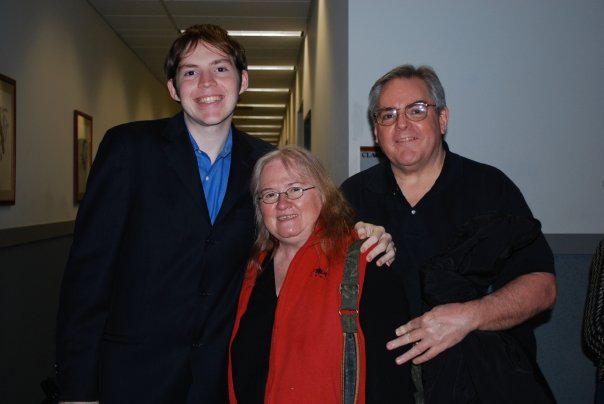
                                          My family.

Kerry’s new book, “Autism and Falling in Love,” tells the story of how he was nonverbal as a child and overcome the odds to become a national speaker and find a relationship as an adult. You can learn more about Kerry and his book here.

Article HERE.

Tuesday, November 12, 2013

Parents create custom jobs for adult kids with autism

Lori Ireland and a handful of other parents in Chapel Hill, N.C., had a simple dream: They wanted their teenage children to be able to have jobs someday. Sitting around with nothing productive to do would be unsatisfying and frustrating for their kids, not to mention expensive.
But they also knew the dismal truth: It's tough for someone with autism to get a job.
So, like an increasing number of parents with children on the autism spectrum, Ireland and her peers set out to employ them themselves. Their non-profit Extraordinary Ventures businesses, including one cleaning city buses and another making candles and other gifts, now employs 40 people with developmental disabilities in the Chapel Hill area.
Read more of Karen Weintraub's USA Today article HERE.

Tuesday, March 26, 2013

CDC Study Pegs Autism Prevalence at One Child in 50

By Christina Samuels from On Special Education

From guest blogger Alyssa Morones:

A new report from the Centers for Disease Control and Prevention estimates that one in 50 school-aged children has an autism spectrum disorder. That's a significant increase from 2008, when the CDC estimated that 1 in 88 children had the disorder.

The data for this report came from a study by the CDC's National Center for Health Statistics, which surveyed more than 95,000 parents with children under 17 years old.

In an interview with the Associated Press, health officials said that this is not an indication that autism is occurring more often. Rather, the results suggest that doctors are diagnosing autism, especially milder cases, more frequently.

The CDC gathered this data by randomly phoning households identified as having children under the age of 17. Of the households called, less than a quarter of parents agreed to the survey, which researchers attributed to the study using both landlines and cell phones to reach parents.

Read more HERE.

Tuesday, March 12, 2013

Kids With Autism Face Increased Suicide Risk


Children with autism are much more likely than other kids to consider taking their own lives, new research suggests.
In what’s believed to be the largest study to date looking at suicide and autism, researchers found that children with the developmental disorder were 28 times more likely than typically developing kids to contemplate or attempt suicide. Among those with autism, kids who were bullied or teased and those with depression or behavior problems were at highest risk.
The study published recently in the journal Research in Autism Spectrum Disorders looked at nearly 800 kids with autism, almost 200 without the developmental disorder and 35 kids with depression and no autism diagnosis, all between the ages of 1 and 16. Researchers reviewed interviews with the children’s mothers and looked at clinical data on the kids.
Among those with autism, 14 percent had talked about harming or killing themselves or had attempted suicide. The severity of their diagnosis and IQ score did not appear to impact whether or not a child was at risk, but certain demographic factors did. Children with autism who were male, black or Hispanic, age 10 or older and those with lower socioeconomic status did appear to be more likely to have thought about suicide.
Read more of Michelle Diament's Disability Scoop article HERE.

Friday, January 4, 2013

Help for Schools: Understanding ASD

By Judy Endow, MSW Special Education Articles  From Special Education Advisor


Due to the media speculation that Adam Lanza, the suspect in the recent Sandy Hook Elementary School tragedy, may have been affected with Asperger Syndrome, concern has developed on several fronts. Of immediate  concern is fear that students returning to school who have been previously identified with having an Autism Spectrum Disorder may now be stigmatized, especially those who may exhibit meltdown behaviors in the educational setting.
The politically incorrect question on everybody’s mind is, “Are students with ASD dangerous when they have meltdowns and might this behavior lead to another Sandy Hook kind of incident at our school?”
Read more HERE.

Thursday, September 13, 2012

Autism Research, Parent-Training Centers Get Cash Infusion

From Nirvi Shah from On Special Education


Nine sets of researchers will split $100 million in grant money from the National Institutes of Health to research different aspects of autism.
The awards, spread out over the next five years, are part of the Autism Centers of Excellence research program. This year, the research will expand to look into children and adults who have limited or no speech, links between autism spectrum disorders and other genetic syndromes, potential treatments, and the reasons why these disorders are more common among boys than girls, said Alice Kau, Ph.D., of the Intellectual and Developmental Disabilities Branch at the Eunice Kennedy Shriver National Institute of Child Health and Human Development. That's one of the five National Institutes of Health entities funding the Autism Centers of Excellence Program.
Read more HERE.

Saturday, August 18, 2012

Parent-Teacher Teamwork and a Dash of the Unexpected Help Coax Breakthroughs for Special Needs Kids

By Jamie Grover, director of group development, Autism on the Seas        Special Education Advisor - Special Education Articles

When you’re parenting a special needs child, only someone running in your shoes can really understand the marathon of challenges associated with educating that child.

As a former parent educator at a major university in California, and a parent of a child on the autism spectrum, I understand the importance of educating our special children. It takes a village to raise a child. And when that child has special needs, it sometimes takes a village, the neighboring village, and a tribe of warriors!

Finding balance between a child’s disability, a quality education and some fun innovative experimentation, is the greatest challenge of all. With all the therapies, behavioral plans, IEPs, etc., that our kids are subjected to, it’s easy to lose sight of one of the simplest and effective educational tactics: Teamwork. Yes, teamwork, between you and your child’s Special Ed Teacher.

Read more HERE.

Wednesday, April 25, 2012

Why Autistic Children Are Bullied More -- and Bully in Return

Despite the growing awareness, bullying is still common in schools these days. Some kids are bullied and some bully others. But, as a new study finds, kids with autism spectrum disorder (ASD) may have an even harder time with bullying, being many times more likely than their neurotypical siblings to have experienced it in their lifetimes. Even more disturbing, autistic kids may be intentionally triggered into having meltdowns by bullies who know how to push the right buttons. 

The new study, from Kennedy Krieger's Interactive Autism Network, surveyed families with autistic and non-autistic siblings from all over the country, asking about their experience with bullying in the past and present. 


Read more of Alice G. Walton's Forbes Women/Parenting  article HERE.

Wednesday, February 15, 2012

Supporting Inclusive Schools: A Handbook for Developing and Implementing Programming for Students with Autism Spectrum Disorder

By Brent Epp, Consultant from Manitoba Education

Background

Autism Spectrum Disorder (ASD) is a complex neurological disorder that affects the function of the brain. The symptoms of ASD include impairments in communication and social interaction and restricted, repetitive patterns of behaviours, interests, and activities. ASD is referred to as a spectrum disorder because symptoms can be present in a variety of combinations and range in severity from mildly to profoundly disabling. The cause is not known and males are approximately four to five times more likely to have ASD than females. In Manitoba schools, programming for students with ASD is done by a team, including the parents, using an individual planning process.

Supporting Inclusive Schools: A Handbook for Developing and Implementing Programming for Students with Autism Spectrum Disorder recognizes the need of educators for a resource to support appropriate educational programming for students with ASD.

Read complete article HERE.

Tuesday, February 14, 2012

The Scoop On Poop: Understanding Digestive Imbalances in Autism Spectrum Disorder

When: Tuesday, February 21, 2012

Time: 6:30pm-8:30pm

Where: Child Care Links - Conference Room

Cost: Registration is FREE - Call now to reserve your spot

Address: 6601 Owens Drive,
Suite 100 Pleasanton, CA 94588
childcarelinks.org


In this talk Dr Abrin will explore the digestive and stool patterns of chronic candida, bacteria, parasite and gluten sensitivity.


What does a normal stool look like?

What lab testing will identify a serious gut inflammation problem?

When should my child see a GI doctor?

What is the link between the gut and the brain/child’s behavior?


This talk is a must for all parents and providers of special needs children.


To register please contact Christy Samson at 925.249.3908 or csamson@childcarelinks.org

Sunday, September 26, 2010

Cognitive Skills in Children with Autism Vary and Improve, Study Finds

Article adapted by the Autism Society from a press release of the Society for Research in Child Development:
New study from the Society for Research in Child Development

People with autism spectrum disorders (ASD) are thought to have a specific profile of cognitive strengths and weaknesses—difficulties appreciating others’ thoughts and feelings, problems regulating and controlling their behavior, and an enhanced ability to perceive details— but few studies have tracked children’s cognitive skills over time. Now new longitudinal research provides clues that can inform our understanding of ASD.

“Parents and clinicians already know that the behavioral signs of ASD wax and wane throughout development,” notes Elizabeth Pellicano, senior lecturer of autism education at the Institute of Education in London, who carried out the study. “What we know a lot less about is how the cognitive skills of children with ASD change over time. In this study, we found that these skills vary from child to child, and also that some of them can improve over time.”

Saturday, July 24, 2010

Autism Has Unique Vocal Signature, New Technology Reveals

ScienceDaily (July 23, 2010) — A new automated vocal analysis technology could fundamentally change the study of language development as well as the screening for autism spectrum disorders and language delay, reports a study in the July 19 online Proceedings of the National Academy of Sciences. READ MORE

Tuesday, May 18, 2010

Get to Know Your District: Autism Task Force

What is the Autism Task Force?

The Autism Task Force is made up of parents, teachers, administrators, behavior analysts, psychologists, parent liaison, and occupational therapists volunteering for the purpose of providing ongoing support and training to the Mt. Diablo Community. We are currently focusing our efforts on providing parent and teacher workshops as well as fundraising to support the ASD community in the district. In years past, we have also supported the development of autism-specific programming in the District.


Who is a part of the Autism Task Force?

Teachers, administrators, parents, behavior analysts, speech pathologists, occupational therapists, interested community members.


How do you contact the Autism Task Force?

Our current contact person is Joel Vidovic who is best reached via district email (vidovicj@mdusd.k12.ca.us) and may alternatively be reached via telephone at (925) 682-8000 ext. 4216


How can people get involved in the Task Force?

We have three basic levels of involvement. First of all, we have a core group of members who lead the group through new projects and ongoing monitoring of policies and practices. These individuals have committed to regular attendance at Task Force meetings and consistent involvement in Task Force activities. Secondly, people may attend our meetings and become volunteers during Task Force events to gain more knowledge about the Task Force prior to becoming core members. Finally, people may feel free to come to our meetings as attendees who are just interested in listening and learning more about the group and our current projects.


Any additional information you would like to add about the Autism Task Force?

It is the hope of the group that all participants in Task Force meetings and events function as a team working towards a common goal- support for the population of students and families with ASD.

Saturday, April 10, 2010

Social Thinking Providers Conference

Michelle Garcia Winner's Social Thinking Providers Conference

When: June 25-27. 2010

Where: South San Francisco Convention Center, South San Francisco, CA

For more information, click here.

Tuesday, April 6, 2010

Stanford ASD Update

WHAT: 3rd Annual Autism Spectrum Disorder Update: This conference is designed to provide parents, teachers, and care providers of children with ASD with the latest findings on research and clinical care, utilizing a lifetime perspective. In addition, there will be an opportunity to learn more about clinical and basic science research in autism being undertaken at Stanford University. Sponsored by Stanford School of Medicine and Lucile Packard Children's Hospital.

WHEN: May 15

WHERE: Stanford University

COST: $100

More information and registration HERE.

Tuesday, March 9, 2010

Transition Planning by Orion Academy

WHAT: Orion Academy's 4th annual seminar on post-high school transition planning for your adults with aspergers, NLD and other neurocognitive deficits. Keynote speaker Joey Travolta has a background in show business, as well as having been a special-education teacher, Joey facilitates film camps in several states around the country for students on the Autistic Spectrum.

TOPICS: What is transition planning and when should it start, Transition to College and Greater Independence, Support for Parents,Special Needs Trusts and Estate Planning

WHEN: Saturday - March 20th, 2010

TIME: 8:30 am to 4:00 pm

WHERE: Lafayette Park Hotel, 3287 Mt. Diablo Blvd, Lafayette

COST: $100 (Includes lunch and informational binder

REGISTRATION: Required due to limited seating. Download form HERE.

Thursday, February 18, 2010

Helping Your Young Child with Autism Communicate and Interact

Kaiser Permanente ASD Regional Health Education Program is providing a 4-class series for parents of children from ages birth to 5 years with Autism Spectrum Disorder.

April 12, 20, 27, and May 4, 2010
6:30 - 8:30 pm


Location:
Kaiser Permanente Pleasanton Department of Mental Health

3825 Hopyard Road, Suite 140
Pleasanton, CA 94588

Instructors: Lianne Zerbe, LCSW and Sylvia Castillo, LCSW

Who: Kaiser Permanente Members with a child from ages birth to 5 years with an ASD diagnosis

Fee: $50 per family pay at time of registration.

Call to register with Lianne Zerbe at (925) 847 - 5587

Topics Will Include:
- How Autism impacts your child's social-communication development
- Understanding why communication and interaction is so difficult and stressful for your child
- How you as a parent influence your child's communication
- How to help your child communication, interact, and play

Saturday, June 13, 2009

Autism Speaks launches Safety Project

Last week the national organization, Autism Speaks, launched Autism Safety Project. The program aims to provide information to first responders on how to communicate with individuals with autism and help families collaborate with first responders. My family has had a couple of close calls with our "eloper," and have had a positive experience with the Concord PD, including "flagging" our child in the 911 system. Do you have any stories or tips to share?